

Alteril Side Effects: Is Your Sleep Supplement Safe?
Finding the perfect sleep aid can feel like a game of trial and error. For many struggling with occasional sleeplessness, Alteril has become a popular choice. It combines traditional nighttime herbs like chamomile, valerian root, and L-theanine with Melatonin—a hormone that regulates your sleep-wake cycle.
However, before stocking up on your favorite wellness products, it is crucial to understand what you are putting into your body. What are the alteril side effects of Melatonin, and how much is truly safe? Let’s break down the science, look at real user experiences, and uncover the risks of overdoing your sleep supplements.
What is Alteril?
Alteril is an over-the-counter sleep aid designed to help you fall asleep faster and achieve deeper rest. While its herbal blend is generally well-tolerated, the primary driver of its sleep-inducing power is Melatonin. Because it is available without a prescription, many people assume it is completely risk-free. However, reading through real Alteril reviews reveals a more nuanced story.
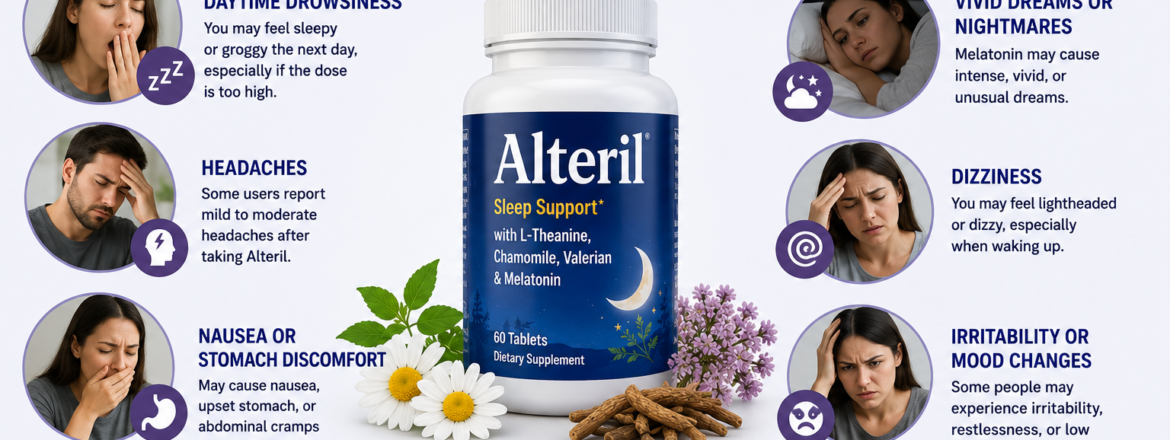
While many users praise the supplement for rescuing them from insomnia, others report grogginess, vivid dreams, and mild stomach upset. Most of these complaints stem not from the herbs but from the way the body processes the melatonin content.
Understanding Excessive Melatonin Side Effects
Because Melatonin is a natural hormone produced by the pineal gland, there is a common misconception that “more is better.” In reality, your body only needs a tiny amount (usually between 0.5mg and 5mg) to signal that it is time for bed.
When you exceed normal doses, you risk experiencing excessive melatonin side effects. These can include:
- Daytime drowsiness and the feeling of a “sleep hangover.”
- Intense, vivid nightmares or bizarre dreams
- Mild headaches and dizziness
- Nausea or abdominal cramps
- Short-term feelings of depression or irritability
If you are looking to balance your nighttime routine safely, it is wise to explore a verified health and wellness collection [Insert Link] to find properly dosed options.
What Happens If You Take Too Much Melatonin?
If you have ever stared at the ceiling at 2:00 AM, you might have been tempted to double or triple your dose. But what happens if you take too much Melatonin?
While a melatonin overdose is rarely life-threatening, it can completely backfire on your sleep goals. Flooding your system with excess hormones can disrupt your circadian rhythm (your body’s internal clock), making it even harder to sleep naturally in the following days. It can also cause your blood pressure to fluctuate or leave you feeling incredibly sluggish the entire next day.
Is it Bad to take 20mg of Melatonin?
To put things into perspective, many experts consider 10mg to be the absolute upper limit for adults. So, is it bad to take 20mg of Melatonin? Yes, for most people, 20mg is an excessively high dose that vastly exceeds what the body requires. Taking this much dramatically increases your chances of waking up with severe grogginess, a severe headache, or nausea.
Ultimately, can taking too much Melatonin be bad for your long-term health? While it won’t typically cause severe toxicity, relying on massive doses can mask underlying sleep disorders and cause your body to become less responsive to its own natural sleep signals. If you prefer to buy your supplements in bulk to save time and money, sticking to standard, lower-dose formulas found in a trusted wholesale vitamins catalog [Insert Link] is the safest approach to protecting your sleep health.
Frequently Asked Questions
1. What are the most common Altieri side effects?
The most frequently reported side effects of Alteril include next-day grogginess, vivid dreams, mild headaches, and occasional stomach discomfort. Because it contains valerian root and Melatonin, it can cause deep relaxation, meaning you should never operate heavy machinery after taking it.
2. Can taking too much Melatonin be bad for your heart or blood pressure?
In massive doses, Melatonin can interact with blood pressure medications and potentially cause minor fluctuations in heart rate or blood pressure. If you have an underlying cardiovascular condition, always consult your doctor before taking high doses of sleep aids.
3. How long does Alteril stay in your system?
Melatonin typically has a half-life of about 20 to 50 minutes, meaning your body processes most of it within a few hours. However, the herbal components in Alteril, like valerian root, can have longer-lasting sedative effects, which is why some users experience a “hangover” effect the next morning.
4. Can I take Alteril every single night?
Alteril is formulated for short-term use to help manage occasional sleeplessness or jet lag. Relying on it every night can lead to tolerance, meaning you will need higher doses to achieve the same effect. If your insomnia lasts more than a few weeks, it is best to speak with a healthcare provider.